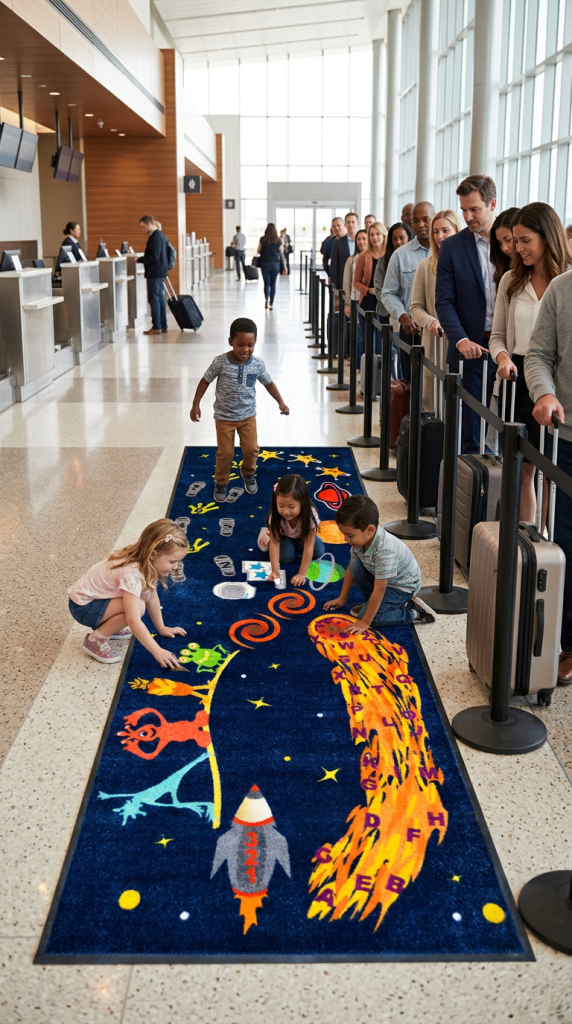
Why Airports Are Investing in Sensory Spaces — And What It Means for Your Terminal
By the 321 Sensory Paths Team | Pediatric Physical Therapist-Developed Solutions for Hospitality
The modern airport terminal is a marvel of efficiency — and a minefield for the senses. Bright fluorescent lighting, constant gate announcements, unpredictable crowds, and the rumble of rolling luggage all collide in a space where families are expected to wait, often for hours. For the roughly 1 in 5 travelers who are neurodivergent — including children and adults with autism, ADHD, sensory processing disorder, anxiety, and PTSD — this environment can quickly become overwhelming.
Airport operators have noticed. From Newark to San Francisco, from Houston to Seattle, terminals across the country are investing in dedicated sensory spaces. The results are making headlines — and the data behind this movement is something every airport, airline lounge, and transportation hub should be paying attention to.
Here’s what is happening, why it’s working, and how your airport can be part of it.
The Numbers Behind the Movement
- The global sensory-friendly travel market reached $5.1–5.6 billion in 2024 and is projected to grow at a compound annual rate of 13–14% through 2033.
- Over the past two years, 25.6 million travelers with disabilities took a combined 76.9 million trips and spent nearly $50 billion on travel annually.
- A Booking.com 2025 Travel Predictions survey found that 49% of neurodivergent travelers reported a negative travel experience due to lack of inclusivity.
- 68% of neurodivergent individuals actively want sensory rooms and dedicated calming spaces in airports and travel hubs.
What Leading Airports Are Actually Doing
More than three dozen U.S. airports now have dedicated sensory spaces. A few standouts:
- Newark Liberty (EWR): Opened a second sensory room in March 2025.
- Seattle-Tacoma (SEA): Opened its first sensory room with a second under construction in 2025.
- Detroit Metropolitan (DTW) & San Francisco International (SFO): Both opened new multi-sensory rooms in late 2024.
- Houston (IAH): Opened its second sensory area in November 2024.
The Gap the Industry Hasn’t Filled Yet: The Concourse
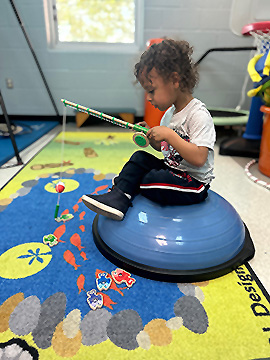
Unlike sensory rooms, which require dedicated space, 321 Sensory Paths are portable sensory solutions that can be placed in gate areas, concourses, and family lounges.
| Feature | Sensory Room | 321 Sensory Path |
|---|---|---|
| Installation | Permanent | Portable |
| Cost | $50,000–$200,000+ | Accessible entry-level |
Ready to Bring Sensory to Your Airport?
321 Sensory Paths offers hospitality-grade sensory solutions designed specifically for commercial environments. You don’t need a $100,000 renovation to tell traveling families: we see you, and we made this space for you.