
Why Airports Are Investing in Sensory Spaces — And What It Means for Your Terminal | 321 Sensory Paths


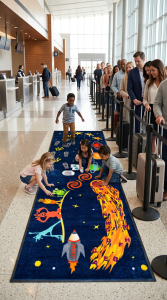
Child enjoying a 321 Sensory Path — sensory movement solutions for airports and hospitality

Why Airports Are Investing in Sensory Spaces — And What It Means for Your Terminal

By the 321 Sensory Paths Team | Pediatric Physical Therapist-Developed Solutions for Hospitality

The modern airport terminal is a marvel of efficiency — and a minefield for the senses. Bright fluorescent lighting, constant gate announcements, unpredictable crowds, and the rumble of rolling luggage all collide in a space where families are expected to wait, often for hours. For the roughly 1 in 5 travelers who are neurodivergent — including children and adults with autism, ADHD, sensory processing disorder, anxiety, and PTSD — this environment can quickly become overwhelming.

Airport operators have noticed. From Newark to San Francisco, from Houston to Seattle, terminals across the country are investing in dedicated sensory spaces. The results are making headlines — and the data behind this movement is something every airport, airline lounge, and transportation hub should be paying attention to.

Here’s what is happening, why it’s working, and how your airport can be part of it.


The Numbers Behind the Movement

This isn’t a niche amenity. It’s a response to a documented, growing passenger need.

  • The global sensory-friendly travel market reached $5.1–5.6 billion in 2024 and is projected to grow at a compound annual rate of 13–14% through 2033, potentially reaching $15–17 billion. (Growth Market Reports / Dataintelo, 2024)
  • Over the past two years, 25.6 million travelers with disabilities took a combined 76.9 million trips and spent nearly $50 billion on travel annually. When travel companions are included, that figure tops $100 billion per year. (Open Doors Organization, 2024 Market Study)
  • A Booking.com 2025 Travel Predictions survey found that 49% of neurodivergent travelers reported a negative travel experience due to lack of inclusivity, and 50% said their options feel limited because of it.
  • 68% of neurodivergent individuals actively want sensory rooms and dedicated calming spaces in airports and travel hubs.
  • North America is the dominant region in the sensory-friendly travel market, holding the largest share at approximately $2.2 billion in 2024 — and the U.S. leads that growth.

Put simply: families traveling with neurodivergent children are a large, loyal, and underserved market. The airports that serve them well are earning their repeat business — and their word-of-mouth.


What Leading Airports Are Actually Doing

More than three dozen U.S. airports now have dedicated sensory spaces, and the pace of adoption accelerated dramatically in 2024–2025. A few standouts:

  • Newark Liberty (EWR) opened a second sensory room in March 2025, completing a pre- and post-security sensory experience for neurodivergent passengers. Terminal A was named the best new airport terminal in the world by Skytrax in 2024 and earned a rare 5-star rating. (ROI-NJ, 2025)
  • Seattle-Tacoma (SEA) opened its first sensory room and saw such strong passenger demand that a second is under construction in 2025, with a third in early planning. (ACI Case Study, 2024)
  • Detroit Metropolitan (DTW) and San Francisco International (SFO) both opened new multi-sensory rooms in late 2024, featuring tactile walls, dimmable lighting, and mock aircraft cabins to help travelers prepare for boarding.
  • Houston George Bush Intercontinental (IAH) opened its second sensory area in November 2024 — reflecting demand that had already outgrown one location.
  • Minneapolis-Saint Paul (MSP) has two sensory rooms planned as part of terminal expansion projects due by 2028.

The Business Case: Why Sensory Investment Pays Off

Airport operators investing in sensory spaces aren’t just being altruistic — they’re responding to measurable business logic.

Passenger Satisfaction Is Directly Linked to Stress Reduction

The J.D. Power 2024 North America Airport Satisfaction Study found that when terminals feel “not at all crowded,” overall satisfaction scores average 736 out of 1,000. When terminals feel severely crowded, that score drops to 429. Sensory spaces give families with neurodivergent children somewhere to go during peak congestion — a simple intervention that directly reduces the perceived stress of the terminal experience.

The same study also found that airports delivering on a “unique, local identity” through distinctive décor and thoughtful design outperformed competitors in passenger satisfaction scores — a finding that aligns directly with the kind of intentional, child-focused design that sensory spaces represent.

Regulatory Tailwinds Are Accelerating Adoption

In December 2024, Secretary Buttigieg announced what his department called “the biggest expansion of rights for airline passengers with disabilities in a generation.” New rules effective January 2025 extended protections beyond mobility devices to explicitly include invisible disabilities such as autism. For airports, proactive investment in sensory spaces is no longer just good hospitality — it aligns with a shifting regulatory environment.

Families Who Feel Welcome Come Back

When a family traveling with a child on the autism spectrum finds a sensory space in your terminal, they don’t just feel relief — they remember. They share it. They plan their next trip around it. The Anderson Center for Autism noted that Newark’s sensory room “represents a significant stride in making travel less stressful for families like ours” — a sentiment echoed widely on parent forums and social media where families with neurodivergent children share travel intel obsessively.


The Gap the Industry Hasn’t Filled Yet: The Concourse
Here’s what the sensory room boom has revealed: families who use the dedicated sensory room still face the rest of the terminal.

The walk from security to the gate. The wait at a busy concourse. The moment a child has been calm in the sensory room and then has to sit still for another 45 minutes.

This is where sensory paths come in.

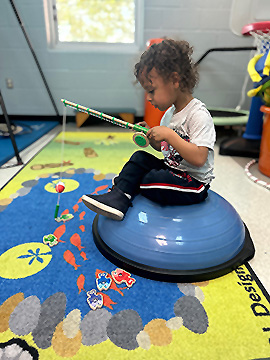
Child using a 321 Sensory Path — portable sensory floor paths for airports, hotels, and hospitality spaces
A 321 Sensory Path in action — portable, pediatric PT-designed, and ready for any space.

Unlike sensory rooms, which require dedicated space, construction, and significant capital investment, 321 Sensory Paths are portable sensory solutions that can be placed in virtually any airport environment:

  • Gate waiting areas — give children something purposeful to do while parents complete check-in tasks
  • Family restroom corridors — a natural transition point for families
  • Children’s play zones near concourse seating
  • Hotel lobbies within airport properties
  • Airline lounge family sections

Every 321 Sensory Path is developed by a pediatric physical therapist and designed to engage the vestibular, proprioceptive, and tactile sensory systems that help children self-regulate. When a child hops, balances, and moves through a sensory path, they’re not just playing — they’re processing. And a child who has processed is a calmer child on the plane.

That’s better for families. It’s better for gate agents. And it’s better for everyone in Row 14.


Sensory Paths vs. Sensory Rooms: Complementary, Not Competing

Airports investing in sensory rooms and airports considering sensory paths aren’t choosing between two options — they’re addressing two different moments in the passenger journey.

Feature Sensory Room 321 Sensory Path
Installation Permanent, construction required Portable, no renovation needed
Location One fixed room Any gate, concourse, lounge, corridor
Cost $50,000–$200,000+ Accessible entry-level investment
Use case Deep decompression before/after security Active sensory regulation during the wait
Who benefits Travelers who need a quiet retreat Children who need to move to regulate
Visibility Must be sought out Visible, inviting, and self-explanatory

The airports winning on accessibility have both. But for terminals that haven’t yet made the capital investment in a full sensory room — or for those looking to extend the sensory experience beyond one dedicated space — a sensory path is the most practical, immediate step available.


What Airport Decision-Makers Are Saying

“Sensory rooms elevate the customer service experience by providing a peaceful refuge from what can often be an overwhelming, overstimulating environment for neurodivergent and special needs passengers.”

— Port Authority of New York and New Jersey, on Newark Liberty Terminal A

“A mission of the Customer Experience team at SEA is to educate employees about the entire spectrum of disabilities and how to provide the best customer service for all passengers.”

— Seattle-Tacoma International Airport Sensory Room Case Study, ACI 2024

The language from airport leadership is consistent: this is a customer service issue, not just an accessibility checkbox. Airports that get this right are differentiating themselves on passenger experience — and winning industry recognition for it.


A Global Trend Coming to Every Terminal

The U.S. is leading, but the movement is global. Kempegowda International Airport in Bengaluru opened India’s first airport sensory room. Delhi and Mumbai airports introduced therapy dog programs for anxious and neurodivergent travelers. Minneapolis-Saint Paul (MSP) is planning its first two sensory rooms as part of terminal expansion projects due by 2028.

Airports International, the industry’s leading trade publication, noted in April 2025 that “growing awareness of neurodivergent passengers’ needs is increasingly influential as airports are redeveloped” — and that between 15% and 20% of the world’s population is neurodivergent. That’s not a niche. That’s one in five of every passenger walking through your doors.

Source: Passenger Terminal Today, April 2025


Ready to Bring Sensory to Your Airport?

321 Sensory Paths hospitality solutions — sensory paths for airports, hotels, and cruise ships
321 Sensory Paths hospitality solutions — designed for real-world commercial environments.

321 Sensory Paths offers hospitality-grade sensory solutions designed specifically for commercial environments like airports, hotels, and cruise ships. Our nylon rugs, rubber mats, and vinyl sticker paths are:

  • Developed by a pediatric physical therapist — not just colorful floor art, but therapeutic tools grounded in child development science
  • Portable and flexible — set up in minutes, move as your layout changes, no permanent installation needed
  • Commercially durable — built for high-traffic environments
  • Visually engaging — themed designs that children are drawn to naturally
  • Evidence-informed — rooted in the same sensory integration principles driving the global airport sensory room movement

You don’t need a $100,000 renovation to tell traveling families: we see you, and we made this space for you.
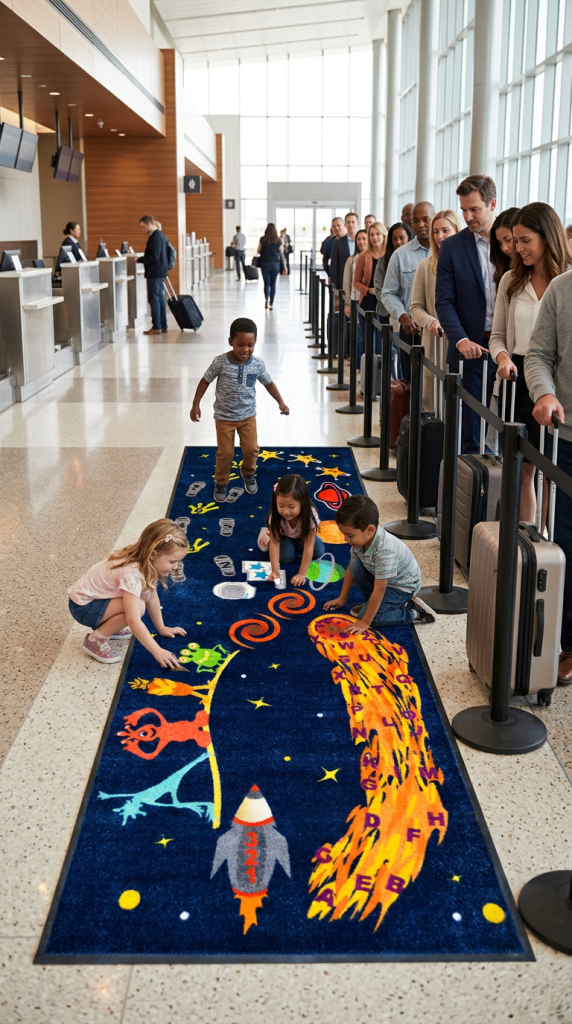
A sensory path does that in the time it takes to unroll it.

Explore Hospitality Solutions →

Or browse our full product range to find the right fit for your space. Have questions about which product works best for your concourse or family lounge? Visit us at 321sensorypaths.com — we’re happy to talk through the options.


Frequently Asked Questions

Why are airports installing sensory spaces?

Airports are responding to a documented passenger need. Busy terminals with bright lights, loud announcements, and unpredictable crowds can trigger sensory overload in children and adults with autism, ADHD, sensory processing disorder, anxiety, and PTSD. Sensory spaces give these travelers a place to self-regulate — and they’re driving measurable improvements in passenger satisfaction scores and brand recognition.

Which U.S. airports have sensory rooms?

More than three dozen U.S. airports now have dedicated sensory spaces, including Newark Liberty (EWR), San Francisco International (SFO), Detroit Metropolitan (DTW), LaGuardia (LGA), George Bush Intercontinental (IAH), Seattle-Tacoma International (SEA), and Tulsa International (TUL), among many others. The list is growing rapidly.

What is a sensory path and how is it different from a sensory room?

A sensory room is a dedicated enclosed space — permanent, constructed, and accessed separately from the main terminal. A sensory path is a portable, interactive floor-based activity that children walk, hop, and move along to regulate their sensory system. Sensory paths can be placed in gate areas, concourses, family lounges, or corridors — no renovation required — and work as a standalone amenity or as a complement to an existing sensory room.

How much does the sensory-friendly travel market grow each year?

The global sensory-friendly travel market reached approximately $5.1–5.6 billion in 2024 and is projected to grow at a compound annual rate of 13–14% through 2033. North America is the largest regional market at approximately $2.2 billion.

Is there regulatory pressure to add sensory spaces?

Yes. New DOT rules effective January 2025 expanded disability protections for airline passengers to explicitly include invisible disabilities such as autism — described by the Secretary of Transportation as “the biggest expansion of rights for this population in a generation.” While sensory room mandates don’t yet exist, the regulatory direction is clear: airports and airlines are expected to do more for neurodivergent passengers.


321 Sensory Paths creates portable, pediatric physical therapist-developed sensory solutions for hospitality environments including airports, hotels, and cruise ships. Learn more about our hospitality solutions or explore the science behind sensory paths.


Why Airports Are Wisely Investing in Sensory Spaces

Scroll to top