
Every child who melts down during a hallway transition, refuses to sit on the carpet, or shuts down during lunch isn’t “being difficult.” They may be telling you something important about how their nervous system is working — or struggling.
New research published in 2026 is reinforcing what many PTs, OTs, and educators already know from experience: sensory processing in early childhood is foundational to emotional regulation, daily participation, and school readiness. Understanding this connection isn’t just clinically useful — it’s essential for creating environments where all children can thrive.
What the Latest Research Tells Us
A 2026 paper from the University of North Dakota, “Sensory Processing in Early Childhood: Developmental Pathways to Emotional Regulation and Participation,” brings together current evidence on how sensory processing shapes a child’s ability to engage with the world. The core finding? No two children process sensory input the same way — and those differences matter enormously.
The research highlights that individual differences in how children receive, interpret, and respond to sensory information can directly affect:
- Behavioral responses and self-regulation
- Anxiety levels throughout the school day
- Ability to participate in play and classroom routines
- Engagement with academic learning
Critically, the paper emphasizes that occupational therapy’s role isn’t to “fix” a child’s sensory system — it’s to adapt environments and build self-regulation skills that allow children to participate more fully in daily life. This is a paradigm shift worth sharing with every school director and classroom teacher you work with.
📄 Read the full paper (University of North Dakota Scholarly Commons)
The Sensory-Emotion Connection: Why It Matters in Schools
There is a well-established relationship between early sensory processing difficulties and emotional dysregulation. A peer-reviewed study published in Frontiers in Integrative Neuroscience (McMahon et al., Duke University, 2019) found that childhood sensory processing disorder symptoms were significantly associated with a higher likelihood of anxiety disorders in adulthood — with emotional dysregulation as a key mediating factor. In other words, when children can’t regulate what they sense, they struggle to regulate how they feel.
For classroom teachers and school directors, this means behaviors that look like defiance, inattention, or emotional immaturity may actually be sensory-driven responses that require environmental support — not discipline.
For OTs and PTs, it reinforces the urgency of early intervention and the importance of bringing sensory-aware strategies into school settings before patterns become entrenched.
Sensory Processing and School Participation
A 2025 scoping review published in Occupational Therapy in Health Care (Grist & Yu, Monash University) explored how interoception and emotional regulation intersect with children’s ability to participate in school occupations — from self-care to academic learning to social play. The review found two key themes: interoception and emotional regulation appear to be related, and education can improve interoceptive awareness. It reinforces that occupational therapists working in educational settings play a pivotal role in supporting the whole range of school-related participation, not just isolated skill development.
Key body functions underpinning school participation include:
- Fine and gross motor skills
- Sensory processing abilities
- Interoception (the sense of what’s happening inside the body)
- Emotional regulation competencies
- Social skills
When any of these are out of balance, a child’s ability to participate — in circle time, in the cafeteria, in PE — is affected.
What This Looks Like in Practice
Understanding the research is one thing. Translating it into daily practice is another. Here are some evidence-informed strategies that bridge the two:
For OTs and PTs
- Conduct environmental assessments alongside standardized sensory evaluations. A child’s sensory challenges often look different in the gym than in the classroom — and different again in the cafeteria.
- Train and collaborate with teachers to identify sensory triggers and build co-regulation strategies into the school day.
- Embed sensory supports into transitions — the moments between activities are often the highest-risk times for dysregulation.
For Educators
- Reframe behavioral responses through a sensory lens. A child who covers their ears, avoids messy play, or constantly seeks movement may be communicating a sensory need.
- Build movement and sensory breaks into the daily schedule. Even brief, structured opportunities for sensory input can significantly improve attention and regulation.
- Create calming spaces or sensory corners in the classroom where children can self-regulate before returning to learning.
For School Directors
- Invest in sensory-aware infrastructure. Sensory paths, calming zones, and flexible seating aren’t extras — they’re evidence-based supports that benefit all students.
- Support ongoing staff training in sensory processing so that teachers and aides feel equipped — not overwhelmed — when children show signs of sensory dysregulation.
- Collaborate with therapy teams to build a whole-school approach, rather than treating sensory support as a pull-out-only service.
How Sensory Paths Support Emotional Regulation
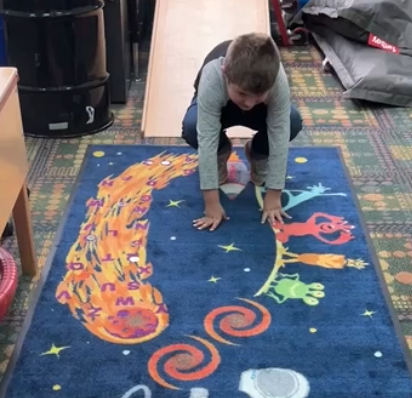
One of the most practical and accessible tools for embedding sensory support into the school day is the sensory path. Placed in hallways, classrooms, or outdoor spaces, sensory paths guide children through movement sequences that engage the proprioceptive, vestibular, and tactile systems — the very systems that underpin regulation.
Research supports the use of structured movement breaks for improving attention and reducing dysregulation. Sensory paths make those breaks visual, engaging, independent, and fun — which means children use them willingly and repeatedly throughout the day.
At 321 Sensory Paths, our paths are designed with both the science and the school day in mind. Whether you’re an OT recommending a solution for a specific student or a school director looking to support your whole student population, we can help you find the right fit.
👉 Explore our sensory path options
👉 Contact us to discuss your school’s needs
The Bottom Line
Sensory processing isn’t a niche topic for specialists — it’s at the heart of how children learn, connect, and participate in school. The latest research makes clear that:
- Every child processes sensory input differently, and those differences shape behavior, anxiety, and participation.
- Emotional dysregulation is often sensory in origin, not behavioral.
- The goal of sensory support is environmental adaptation and skill-building — not changing the child.
- Collaboration between therapists, educators, and school leadership produces the best outcomes.
Whether you’re working one-on-one with a child in a therapy room or making policy decisions for a whole district, the science is pointing in the same direction: build environments that meet children where their nervous systems are.
Want to bring sensory-informed design into your school or therapy setting? Explore how 321 Sensory Paths can support your students and clients.
👉 View Our Sensory Path Products
References:
- Kuppersmith, J. (2026). Sensory Processing in Early Childhood: Developmental Pathways to Emotional Regulation and Participation. UND Scholarly Commons. https://commons.und.edu/psych-stu/128/
- McMahon, K., Anand, D., Morris-Jones, M., & Rosenthal, M.Z. (2019). A Path From Childhood Sensory Processing Disorder to Anxiety Disorders: The Mediating Role of Emotion Dysregulation and Adult Sensory Processing Disorder Symptoms. Frontiers in Integrative Neuroscience. https://www.ncbi.nlm.nih.gov/pmc/articles/PMC6629761/
- Grist, N. & Yu, M.L. (2025). Exploration of Children’s Interoception, Emotional Regulation, or Anxiety and Occupational Participation: A Scoping Review with Narrative Synthesis. Occupational Therapy in Health Care. https://doi.org/10.1080/07380577.2025.2567315