
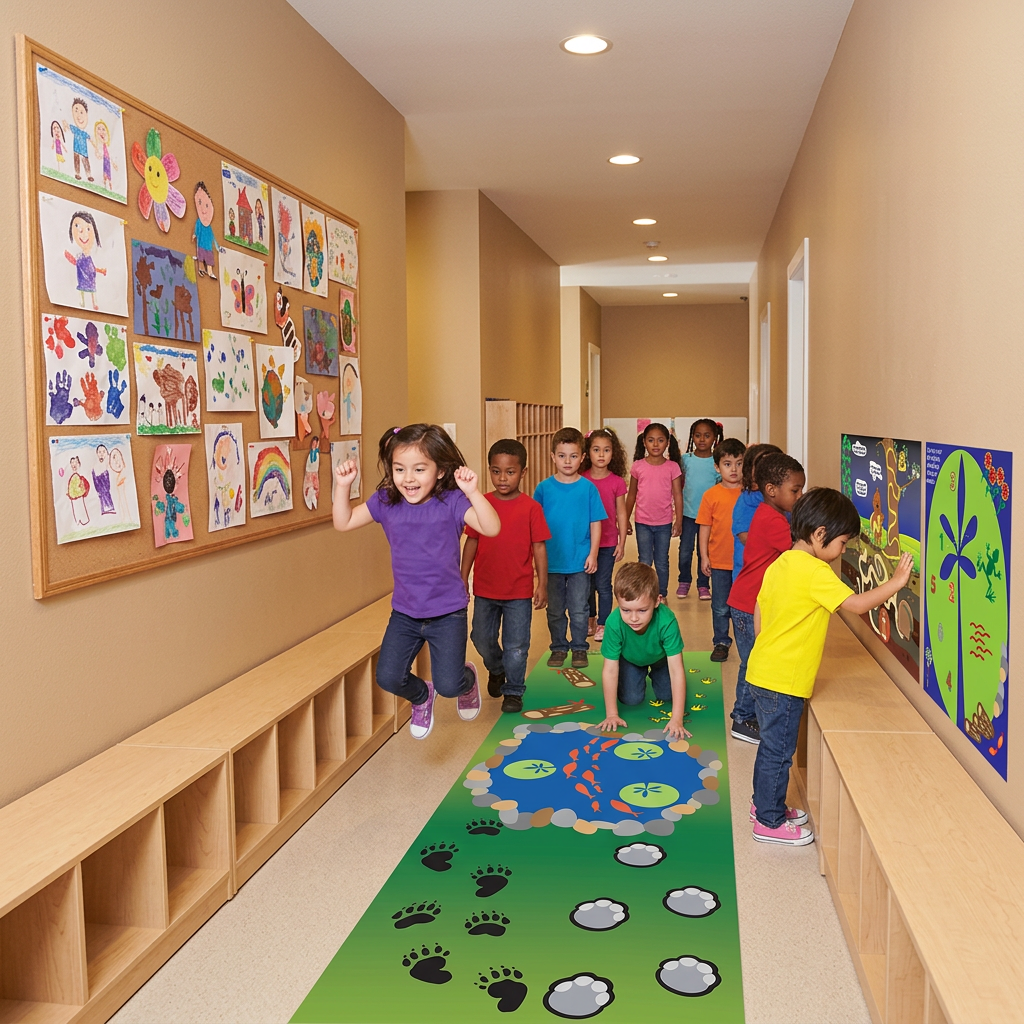
What Happens When Schools and Therapy Offices First Introduce a Sensory Path?
A research-referenced guide for educators, therapists, and parents
The first time a child steps onto a sensory path, something shifts. Teachers notice it. Therapists document it. Parents feel it. But what does the evidence actually say about introducing sensory paths into schools and therapy offices — and what can schools and clinics realistically expect when they take that first step?
The short answer: the data is encouraging, the outcomes are real, and the sooner you introduce structured sensory movement, the more your students and clients stand to gain.
The Problem Sensory Paths Are Designed to Solve
Before we look at outcomes, it helps to understand why sensory paths exist in the first place.
Today’s classrooms are sensory minefields. Multiple visual displays, overlapping peer conversations, varying noise levels, and close physical proximity create a near-constant stream of multisensory stimulation that many students simply cannot filter effectively. For children with sensory processing differences, autism spectrum disorder (ASD), ADHD, or anxiety, this isn’t just distracting — it’s neurologically overwhelming.
A 2023 PubMed study put it plainly: when a child’s sensory integration and processing differences go unaddressed, their school occupational performance suffers measurably. The study found that all three participating students showed meaningful improvement in functional regulation and active participation after a structured sensory integration intervention in a public elementary school — improvements confirmed by both direct observation and teacher interviews.
Sensory paths are a direct, accessible response to this need. As our own Complete Guide to Sensory Pathways in Schools explains, these interactive floor and wall installations guide students through specific movements designed to regulate their nervous systems before learning demands are placed on them.
What the Research Shows About Early Introduction
In School Settings
One of the most consistent findings across sensory research is this: movement-based intervention works, and it works faster than most people expect.
A 2025 systematic review published in Frontiers in Pediatrics — analyzing 21 studies on sensory-based interventions conducted between 2015 and 2024 — found that targeting multiple sensory systems simultaneously produced moderate-to-strong functional improvements in children with developmental differences. The review confirmed that sensory techniques targeting vestibular, proprioceptive, and tactile input in combination are more effective than targeting a single system.
For schools introducing sensory paths specifically, the Children’s Health Council reports that sensory movement pathways address both ends of the arousal spectrum: calming students who are overstimulated while increasing alertness in students who appear disengaged or fatigued. That dual function is rare in educational tools — and it means a single sensory path installation can serve an entire student body with diverse needs.
Early introduction also carries a significant financial upside. According to data cited in our Power of Sensory Work blog, early sensory intervention can prevent some students from requiring formal special education services — saving districts an estimated $8,000–$12,000 per student annually.
In Therapy Offices
Therapy settings tell a similarly positive story. SensoryWellness, an occupational therapy practice specializing in sensory processing, reports that most clients see recognizable change within 4 weeks of beginning a structured sensory program, with significant improvement occurring within 3–6 months.
In clinical settings, sensory paths function as both a regulation tool and an assessment window. Kids First Services notes that sensory integration therapy outcomes include better arousal regulation, improved postural control, and increased self-efficacy — all of which become visible quickly when a child is guided through structured movement sequences.
Perhaps most notably, a hospital-based quality improvement study published in PMC surveyed 160 neurodivergent patients who used a sensory pathway in a clinical setting. More than 50% identified sensory tools as among the most helpful components of their care experience — validating sensory paths not just as clinical tools, but as confidence-building, comfort-affirming spaces that children respond to positively from the very first encounter.
What Teachers and Therapists Actually Observe
The academic literature is one lens. What practitioners report on the ground is another — and often equally compelling.
A capstone study from Eastern Kentucky University examined sensory path implementation in collaboration with classroom teachers and occupational therapists. Despite logistical challenges in scheduling and staffing, teachers ultimately reported positive results, noting a decrease in interfering behaviors and an increase in student attention following sensory path use.
The Advanced Therapy Clinic summarizes what clinicians consistently observe with children undergoing sensory integration therapy: better sensory modulation, reduced distress in response to sensory input, and improved social engagement. These improvements aren’t slow or subtle — they’re often visible within the first weeks of consistent use.
Our own sensory behavior research blog reinforces this: the multiple-baseline study cited from PubMed demonstrated that all three student participants showed improvements in functional regulation after just 15 weeks of twice-weekly intervention. That’s roughly one semester — a realistic, achievable timeline for schools beginning their sensory path journey.
The Bottom Line for Schools and Clinics
Introducing a sensory path isn’t a leap of faith — it’s a research-backed decision with measurable, relatively rapid payoffs. The evidence across peer-reviewed literature, clinical practice, and classroom observation consistently points in the same direction:
- Students and clients respond positively — often immediately
- Behavior referrals and classroom disruptions decrease
- Focus, regulation, and academic readiness improve
- Staff and therapists report meaningful, observable changes
- Children feel seen, supported, and engaged
Whether you’re an elementary school principal looking to transform a hallway, an occupational therapist outfitting a new therapy room, or a parent advocate pushing for better sensory support — the data supports the first step.
Ready to explore what a sensory path could look like in your space? Visit 321sensorypaths.com to browse our research-based products, or read our complete guide to sensory pathways in schools for a deeper dive into planning, implementation, and outcomes.
References
- Piller, A. et al. (2025). Systematic review of sensory-based interventions for children and youth (2015–2024). Frontiers in Pediatrics. frontiersin.org
- Kuhaneck, H. et al. (2023). A sensory integration intervention in the school setting to support performance and participation: A multiple-baseline study. PubMed/AJOT. pubmed.ncbi.nlm.nih.gov
- Eastern Kentucky University OTD Capstone. Sensory paths: A motor-based intervention to decrease out-of-seat behaviors. encompass.eku.edu
- PMC. (2024). Neurodivergent patient experience in a tertiary children’s hospital. ncbi.nlm.nih.gov
- Children’s Health Council. Benefits of sensory movement pathways for children. chconline.org
- Advanced Therapy Clinic. How occupational therapy helps children with sensory processing issues. advancedtherapyclinic.com
- SensoryWellness. Sensory-based occupational therapy for adults and teenagers. sensorywellness.com
- Kids First Services. Understanding the role of occupational therapy in sensory processing issues. kidsfirstservices.com