
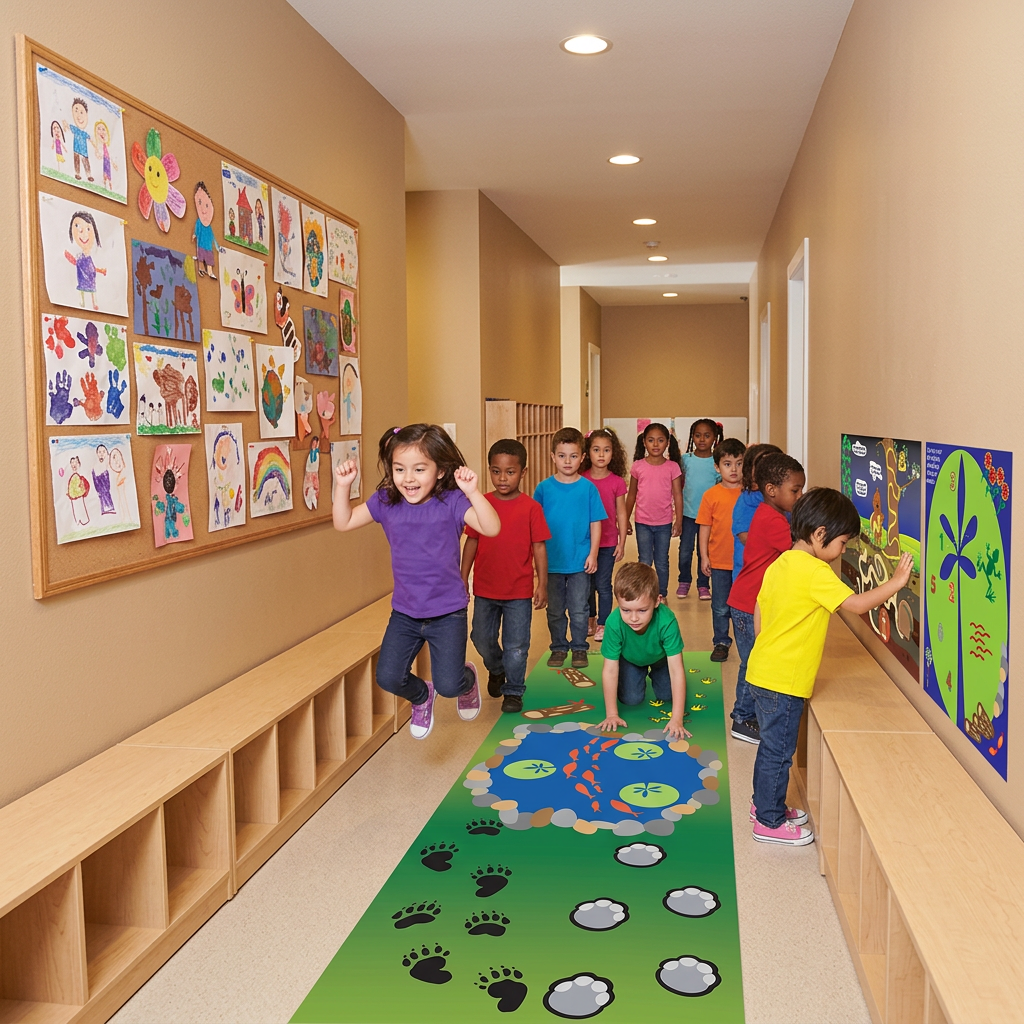
Over the past decade, sensory pathways have undergone a significant transformation in American schools. Originally developed as therapeutic interventions for students with specific sensory processing needs, these movement-based tools have evolved into evidence-based educational supports now recognized as beneficial for diverse student populations. This shift reflects broader changes in educational philosophy, emerging research on learning and development, and increased understanding of sensory processing across the general population.
Current Research on Sensory Processing in School-Age Children
Recent epidemiological studies have revealed higher prevalence rates of sensory processing challenges than previously documented:
- According to research published by UPMC Children’s Hospital of Pittsburgh, sensory processing disorders may affect as many as 16% of U.S. school-aged children
- Studies indicate that sensory processing differences can occur independently of autism spectrum disorder or ADHD diagnoses, representing a distinct category of developmental challenge
- Post-pandemic data suggests increased rates of anxiety, attention difficulties, and social-emotional challenges among students, driving demand for universal supports
These findings have important implications for educational practice. When approximately one in six students experiences some form of sensory processing difficulty, classroom interventions designed only for identified special education populations may be insufficient to address the broader need.
Observable Impacts on Learning Environments
Educational research and clinical observations have identified common manifestations of sensory processing challenges in school settings:
- Attention regulation: Difficulty sustaining focus during instructional periods, particularly when sensory input from the environment competes with academic tasks
- Behavioral dysregulation: Increased anxiety, withdrawal, or disruptive behaviors linked to sensory overwhelm rather than volitional defiance
- Environmental sensitivity: Adverse reactions to typical classroom stimuli including fluorescent lighting, ambient noise levels, tactile experiences, and crowded spaces
- Motor coordination difficulties: Challenges with balance, body awareness, and gross motor skills that affect participation in physical education and playground activities
Importantly, these challenges are not confined to students with formal diagnoses. Teachers report that many students in general education classrooms demonstrate varying degrees of sensory-seeking or sensory-avoiding behaviors that influence their learning readiness and classroom engagement.
Evidence Base for Movement-Based Sensory Interventions
A growing body of research supports the use of structured movement activities to address sensory regulation needs in educational settings. Studies examining sensory pathway interventions have documented measurable outcomes:
- Research indicates that sensory movement interventions can increase classroom attention by up to 40% in student populations with regulatory challenges
- Schools implementing sensory pathways report reductions in behavioral disruptions of approximately 30%, suggesting improved self-regulation capacity
- Administrative data from multiple districts shows 20-40% decreases in disciplinary office referrals following sensory pathway implementation
- Some educational settings report 5-15% improvements in standardized assessment scores associated with consistent sensory pathway usage
For comprehensive analysis of research findings, see: The Complete Guide to Sensory Pathways in Schools
Distinguishing Characteristics of Research-Based Sensory Pathways
Sensory pathways differ from generalized movement breaks or unstructured physical activity in several important ways. These interventions are designed based on occupational therapy principles and incorporate specific types of sensory input through guided movement sequences.
The pathways typically engage proprioceptive and vestibular sensory systems through activities such as jumping, balancing, pushing against resistance, and controlled movement patterns. This targeted approach aims to provide regulatory input that helps organize the nervous system and prepare students for focused cognitive work.
Comparative analysis of different movement interventions can be found at: Sensory Pathways vs. Traditional Brain Breaks
Paradigm Shift: From Accommodation to Universal Design
The most significant development in sensory pathway implementation has been the conceptual shift from viewing these tools as specialized accommodations to recognizing them as universal design elements. This change reflects evolving understanding in several areas:
Universal Design for Learning (UDL) Principles
Universal Design for Learning frameworks emphasize providing multiple means of engagement, representation, and expression. Sensory pathways align with this approach by offering all students access to movement-based regulation strategies, rather than restricting such supports to those with identified disabilities.
This universal approach yields several documented benefits:
- Reduced stigma: When sensory supports are available to all students, participation does not signal special needs status
- Student agency: Students learn to recognize their own regulatory needs and self-select appropriate interventions, developing metacognitive and self-management skills
- Preventive framework: Proactive access to regulatory supports may prevent escalation of minor dysregulation into more significant behavioral incidents
- Resource efficiency: Early intervention through universally accessible sensory supports may reduce the number of students requiring formal special education referrals
Implementation frameworks are discussed in: Building a Sensory-Smart School
Documented Outcomes in Educational Practice
Qualitative data from educators implementing sensory pathways provides insight into practical outcomes. Teachers and administrators report observable changes in student behavior and classroom dynamics.
Representative observations from educational practitioners include:
Students demonstrate improved ability to transition back to focused work following sensory pathway use, with notable decreases in behavioral referrals in schools that have implemented these interventions systematically.
The structured nature of sensory pathways appears to support emotional regulation and cognitive function, offering students a predictable method for self-regulation during the school day.
Additional educator perspectives and implementation case studies are available at: Reviews and Testimonials
Neurological Basis for Sensory-Motor Integration
The efficacy of sensory pathways is grounded in established neuroscience regarding sensory-motor integration and its relationship to cognitive function. Physical movement activates multiple brain regions and stimulates neural networks associated with attention, memory formation, and executive function.
Sensory pathways engage three primary sensory systems:
- Proprioceptive system: Activities involving joint compression, muscle work, and weight-bearing provide information about body position and movement, which research suggests has organizing and calming effects on the nervous system
- Vestibular system: Movement patterns that challenge balance and spatial orientation stimulate the vestibular apparatus, which plays a central role in attention regulation and postural control
- Visual system: Following visual pathways and patterns engages visual-motor integration and visual tracking skills essential for reading and other academic tasks
The integration of these sensory inputs creates conditions conducive to learning readiness. Detailed examination of underlying mechanisms is provided at: The Science Behind Movement and Learning
Implementation Considerations and Modalities
Schools and other institutions implement sensory pathways using various modalities, each with distinct characteristics suited to different environmental constraints and populations:
Portable systems including carpet-based sensory rugs and rubber mat configurations offer flexibility in space utilization, allowing temporary deployment in multipurpose areas
Fixed installations utilizing vinyl adhesive pathways provide consistent availability in high-traffic corridors and transition spaces
Vertical installations such as wall-mounted graphics add vertical plane movement challenges and visual engagement opportunities
Implementation decisions should be informed by factors including available space, student population characteristics, budget parameters, and specific regulatory goals. Many institutions begin with pilot implementations in limited areas before expanding based on observed outcomes and stakeholder feedback.
Applications Beyond Traditional Educational Settings
The utility of sensory pathways extends beyond K-12 educational environments. Research principles supporting their use in schools apply equally to other settings where children experience waiting periods or transitions:
Healthcare environments: Pediatric clinics and hospitals utilize sensory pathways to reduce pre-appointment anxiety and provide constructive activity during wait times
Early childhood programs: Preschools and childcare centers integrate sensory pathways into daily routines to support developing self-regulation skills
Therapeutic settings: Occupational and physical therapy practices employ sensory pathways as transitional activities between treatment spaces or as warm-up activities
Public spaces: Family-oriented commercial environments increasingly recognize the value of providing sensory-appropriate activities for young visitors
Cross-setting applications are detailed at: Hospitality Solutions
Design Principles for Therapeutic Efficacy
Not all sensory pathway implementations are equivalent in therapeutic value. Research-informed design incorporates several key principles:
Evidence-based movement sequences: Activities should target specific sensory systems and muscle groups based on occupational therapy research and clinical practice guidelines
Developmental appropriateness: Movement challenges should be calibrated to the motor and cognitive capabilities of the intended age group
Material durability and safety: Products must withstand intensive use in institutional settings while maintaining slip resistance and structural integrity
Engagement factors: Visual design elements should motivate participation while avoiding overstimulation
Professional-grade sensory pathways are typically developed through collaboration between pediatric therapists, educators, and researchers, with iterative testing in clinical and educational settings. Additional product information is available at: 321 Sensory Paths Product Overview
Future Directions in Inclusive Educational Design
The evolution of sensory pathways from specialized therapeutic tools to universal educational supports reflects broader trends in educational theory and practice. This trajectory aligns with several contemporary educational frameworks:
Social-emotional learning integration: Teaching students to identify and address their sensory-regulatory needs supports development of self-awareness and self-management competencies identified in SEL frameworks
Trauma-informed educational practice: Providing predictable, accessible sensory regulation tools supports students who have experienced trauma or adverse childhood experiences
Whole-child developmental approaches: Recognition that physical, emotional, and cognitive development are interconnected rather than separable domains
As implementation becomes more widespread and additional longitudinal data accumulates, sensory pathways may transition from innovative intervention to standard educational infrastructure, similar to the historical normalization of school playgrounds, libraries, and counseling services.
Implications for Practice
The research base supporting sensory pathway interventions has implications for various educational stakeholders. Administrators seeking to improve school climate and reduce behavioral incidents may find sensory pathways to be evidence-based tools worthy of consideration. Educators looking to support diverse learning needs within general education classrooms may benefit from incorporating movement-based regulation opportunities.
The shift from accommodation-based to universal design approaches suggests that sensory supports should be considered essential elements of learning environments rather than optional additions. This perspective positions sensory pathways as infrastructure investments in educational quality rather than specialized equipment for particular student subgroups.
Additional resources for implementation planning and professional development are available through the Learning Zone and related educational materials at 321sensorypaths.com.
Research-Based Sensory Solutions
For additional information on evidence-based sensory pathway implementation:
Facebook | Instagram | Pinterest