
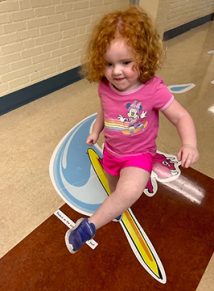
When children hop, jump, and navigate their way through a sensory path, they’re doing so much more than having fun—they’re engaging in powerful therapeutic activities that support critical developmental skills. As a pediatric physical therapist-designed tool, 321 Sensory Paths incorporate evidence-based movement patterns that address fundamental areas of child development.
The Power of Bilateral Coordination
One of the most significant therapeutic benefits of sensory path activities is the development of bilateral coordination—the ability to use both sides of the body together in a controlled and organized manner. This foundational skill is essential for virtually every daily activity children encounter.
Bilateral coordination indicates that both sides of the brain are communicating effectively and sharing information. According to research from occupational therapy experts, bilateral coordination is closely related to the vestibular system, which allows our bodies to register movement and gravity and respond with appropriate movement, balance, and posture.
Children who have difficulty coordinating both sides of their body can struggle with:
- Daily living tasks like dressing and tying shoes
- Fine motor activities such as stringing beads and buttoning
- Visual motor tasks including writing, cutting, and catching
- Gross motor activities like crawling, walking, climbing stairs, and riding a bike
Sensory paths address this need by incorporating movements that require children to use both sides of their body together—from jumping with both feet to crossing midline activities. Research shows that crossing the midline is vital to the development of bilateral coordination and strengthens neural connections between the left side of the brain (language and logic) and the right side (emotions and creativity), leading to improved emotional regulation.
Why Two-Footed Jumping Matters
The ability to jump with both feet is a critical gross motor milestone that typically emerges around 24 months of age, with 50% of children achieving this skill by that time and 75% by 27 months. However, the importance of this skill extends far beyond that initial achievement.
Jumping helps develop:
- Leg strength and balance: Jumping requires significant muscle power and coordination
- Motor planning and sequencing: Children must judge distance, evaluate force needed, plan movements, and execute the jump in proper sequence
- Bone strength: Jumping creates beneficial stress on bones that helps them grow and harden
- Confidence and social interaction: Jumping is central to playground activities and games that build social skills
According to developmental specialists, research shows that children who lack basic skills like jumping often show lower levels of physical fitness as they grow older. Missing these foundational skills can make participation in physical activities more difficult and cause children to avoid them, potentially leading to social isolation from peers.
The jumping activities incorporated into our sensory rugs and vinyl paths provide repeated practice opportunities in a fun, engaging format that motivates children to develop and refine this essential skill.
Executive Function Development Through Movement
Executive functions—the cognitive processes that help us plan, focus attention, remember instructions, and juggle multiple tasks—are foundational to success in school and life. Remarkably, physical activities like those on sensory paths can significantly improve these critical thinking skills.
Research published in the American Journal of Occupational Therapy demonstrates that physical activities incorporating coordination and motor skill development show improvements in working memory, particularly when working memory demands are greater. The study found that exercising bimanual coordination may improve executive functions in children.
Sensory paths challenge executive functions by requiring children to:
- Sustain attention: Focus on completing the sequence of movements
- Exercise working memory: Remember and follow multi-step patterns
- Practice inhibitory control: Wait their turn and control impulsive movements
- Demonstrate cognitive flexibility: Adapt to different movement challenges
- Engage in motor planning: Think ahead about body positioning and movements
As noted in recent research, team sports and physical activities enhance cognitive engagement and motor coordination, which require inhibitory control and flexibility. Our case studies demonstrate these principles in action—children who use sensory paths regularly show improvements not just in physical skills but also in problem-solving, focus, and self-regulation.
Improving Gross Motor Skills
Gross motor skills involve the large muscles of the body and are essential for movements like walking, running, jumping, and climbing. These skills form the foundation for fine motor development and are directly related to body awareness, reaction speed, balance, and strength.
Regular physical activity is essential for healthy child development. Sensory paths provide an accessible, engaging way to incorporate movement throughout the school day or home routine, helping children meet their daily activity needs.
Activities on sensory paths develop gross motor skills by:
- Building core strength and stability through balance challenges
- Enhancing coordination through sequenced movement patterns
- Developing spatial awareness as children navigate the path
- Strengthening leg muscles through jumping, hopping, and lunging activities
- Improving postural control and body awareness
Our Outer Space Rug and Sensory Island Rug are specifically designed to provide varied gross motor challenges that build strength and coordination progressively.
The Role of Proprioception and Vestibular Input
Two lesser-known sensory systems play crucial roles in child development: proprioception and the vestibular system. Understanding these “hidden senses” helps explain why sensory paths are so therapeutically beneficial.
Proprioception: Body Awareness
Proprioception is the sense that tells us where our body is in space without having to look. Receptors in muscles, joints, and ligaments provide feedback about body position and movement. This sense is essential for coordinating movements, maintaining balance, and developing body awareness.
According to pediatric occupational therapy research, proprioception is important in building body awareness and achieving motor milestones. Children who struggle with proprioceptive processing may appear clumsy, have difficulty with motor planning, or seek excessive movement input.
Sensory paths provide rich proprioceptive input through:
- Weight-bearing activities like jumping and landing
- Pushing and pulling motions
- Crawling and animal walk patterns
- Resistive movements against gravity
Vestibular System: Balance and Spatial Orientation
The vestibular system, located in the inner ear, detects head movement and position relative to gravity. It works closely with visual and proprioceptive systems to maintain balance, coordinate movements, and stabilize vision during head movements.
Research published in peer-reviewed journals shows that the vestibular system provides fundamental information for terrestrial life, as postural adjustments and active movements must account for gravity. The brain builds representations of verticality based on vestibular, proprioceptive, and visual information.
The vestibular system supports:
- Balance and postural control
- Spatial awareness and orientation
- Visual tracking and eye-hand coordination
- Attention and arousal levels
- Emotional regulation
Activities like spinning, rolling, inverting, and changing body positions on sensory paths provide vestibular input that helps organize the nervous system and improve self-regulation. As documented in developmental research, fifteen minutes of swinging can have a 6-8 hour effect on the brain, and vertical movement is particularly organizing for the nervous system.
Integration of Multiple Sensory Systems
What makes sensory paths particularly powerful is that children are simultaneously integrating sensory input from five different sensory systems: tactile (skin), proprioceptive (muscles and joints), vestibular (inner ear), visual (eyes), and auditory (ears).
This multi-sensory integration is exactly what the brain needs for optimal development. According to research cited by Dr. Krystal Starke, sensory play facilitates the formation of rich neural pathways that support learning and growth in all children, regardless of neurotype. The exposure to sensory-rich environments positively influences cognitive development.
Our themed paths—from Walk in the Meadow to Rexy’s Sensory Playground—are designed to engage multiple sensory systems simultaneously while capturing children’s imagination and motivation.
Self-Regulation and Emotional Benefits
Beyond physical development, sensory paths offer significant benefits for emotional regulation and mental health. Movement activities that provide sensory input help children calm their nervous system and regulate emotions.
Self-regulation—the ability to manage emotions and behavior—is a cornerstone of Social-Emotional Learning (SEL). The combination of motor skills development with cognitive awareness helps children grow in all aspects of their lives. When children learn to recognize their body’s signals and connect them to emotions, they can identify when they need a “brain break” to reset and refocus.
As documented in our case studies, sensory paths help children:
- Reduce anxiety and stress
- Improve attention and focus for learning
- Build confidence and self-esteem
- Develop body awareness and self-understanding
- Practice self-directed regulation strategies
Practical Application in Educational Settings
The therapeutic benefits of sensory paths translate directly into improved classroom performance. Teachers and school counselors consistently report that sensory paths help students:
- Transition more smoothly between activities
- Return to learning in a more focused state
- Self-regulate without leaving the classroom
- Release excess energy constructively
- Practice taking ownership of their regulation needs
Our wall graphics provide additional opportunities for quick movement breaks without disrupting classroom flow, while our portable rubber mats offer flexibility to create sensory experiences in any space.
Evidence-Based Design for Maximum Benefit
At 321 Sensory Paths, every design element is intentional and based on over two decades of pediatric physical therapy experience working within a large school district. Our paths incorporate therapeutic activities disguised as imaginative play, ensuring children receive the sensory and motor input they need while engaging in activities they love.
The engaging themes—from dinosaurs to outer space to nature scenes—tap into children’s natural motivation and creativity, encouraging repeated practice that leads to skill mastery. As research demonstrates, children devote time and effort to activities they love, making motivation a key factor in successful therapeutic interventions.
Conclusion: Movement as Medicine
Sensory paths represent a powerful intersection of play, therapy, and education. By providing opportunities for bilateral coordination, two-footed jumping, executive function development, gross motor skill building, and rich sensory input through proprioception and vestibular stimulation, these simple floor and wall graphics deliver profound developmental benefits.
Whether in schools, therapy clinics, daycares, or homes, sensory paths offer an accessible, engaging way to support children’s physical, cognitive, and emotional development. The science is clear: when children move with purpose, their brains and bodies develop in remarkable ways.
Ready to bring these therapeutic benefits to your space? Explore our full collection of sensory paths and discover which option is perfect for your environment.
About 321 Sensory Paths: Created by a pediatric physical therapist, our sensory paths provide professional-grade therapeutic benefits through fun, imaginative play. Learn more about our team and explore our testimonials to see the difference sensory paths are making in schools and homes nationwide.