
How to Design a Family-Friendly Resort Experience That Drives 5-Star Reviews
Guest loyalty is the holy grail of hotel asset management. According to the Family Travel Association’s 2025 U.S. Family Travel Survey, 92% of parents plan to travel with their children this year — the highest level of intent since before the pandemic. Yet in an era dominated by personalized options, many luxury and mid-scale properties struggle with a major bottleneck: retaining the modern traveling family. This blog will review 5 easy ways to design a family friendly resort.
When a resort fails to engage children, it introduces massive logistical stress to the parents. Condor Ferries’ family travel research found that 70% of parents prioritize a property’s dedicated amenities for children when choosing where to book. The properties winning this demographic understand that modern multi-generational travelers are actively moving away from passive entertainment, choosing instead purposeful journeys that favor active, restorative well-being.
By implementing thoughtful environmental design choices, your property can create a seamless, high-satisfaction guest experience that naturally prompts 5-star reviews. Here are four research-backed strategies to elevate your resort’s family-friendly infrastructure.
1. Zoning for Interstitial Spaces: Activating Dead Real Estate
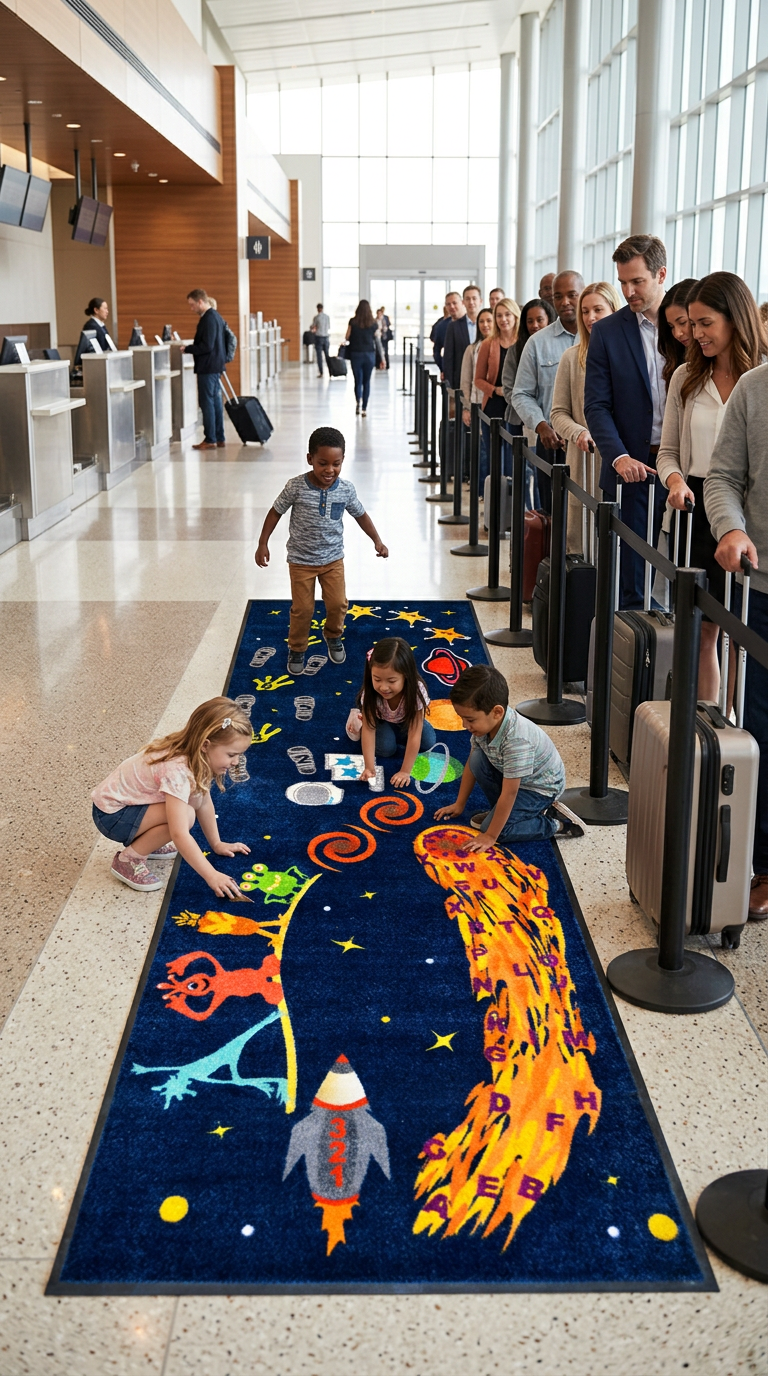
In luxury property design, long hallways, elevator vestibules, and baggage claims are often treated as passive transition zones. However, for a sensory-seeking child, these long stretches of open flooring invite running and high energy levels. Smart floor layouts utilize low-profile, zero-footprint design elements to structure these walkways.
Integrating thematic wayfinding — like our Outer Space Sensory Path rug along terminal walls or corridor carpets — subtly prompts sequential movements like balancing or controlled hopping. This fulfills a child’s gross motor needs while naturally maintaining a quiet, structured pedestrian flow through your property’s high-traffic corridors.
The vinyl path stickers do double duty as functional wayfinders, too. A sequence of decals can guide guests toward the pool or the restaurant, turning a purely directional walk into something kids actually want to follow — no more dragging tired feet down an unmarked hallway.
2. The Flexible Footprint: Adaptive Multi-Use Kids’ Clubs
Modern luxury resorts require spaces that dynamically adapt from structured daytime kids’ clubs to private evening group events. Permanent infrastructure modifications can alienate corporate event planners or wedding parties. Incorporating upscale, rolling amenities avoids this friction entirely.
Our Sensory Island Portable Rug, designed with input from a pediatric physical therapist, allows hospitality teams to establish an interactive, ocean-themed movement zone in under 60 seconds. Featuring 23+ distinct wellness and balance activities, the plush nylon mat rolls out effortlessly over tile, stone, or commercial carpet, gripping firmly via a dense, non-slip rubber backing before rolling up tightly for discreet closet storage.
3. Material Specification: Meeting Strict Commercial Facility Standards
Any interactive element introduced into a public resort lobby must conform to aggressive housekeeping, sanitation, and liability guidelines. Fragile toys or small play pieces create tripping hazards and collect bacteria. Our product line is built with commercial-grade, low-maintenance materials from the ground up.
The sensory path rugs are fully machine washable, so housekeeping teams can keep them guest-ready without special handling. The rubber mats have their designs baked directly into the rubber rather than printed on top, so the graphics won’t fade with repeated cleaning. And the vinyl stickers are commercially printed using the best materials available, built to hold their color and finish under daily foot traffic — see full specs on our order page.
4. Optimize Underutilized Visual Space
A beautiful resort interior should balance high design with functional utility. Overdecorating walls with dense, highly saturated artwork can accidentally cause sensory overstimulation, leading to irritability and behavioral fatigue in younger guests.
Keep your main traffic pathways neutral, clean, and architecturally focused. Then use your floor paths strategically to steer pedestrian traffic. Placing low-profile vinyl paths along elevator vestibules or arcade entrance corridors transforms empty transitions into a fun, orderly path. Children follow the sequence of the decals naturally, reducing running in hallways and keeping traffic flowing smoothly.
The wall graphics work well in exactly the spot that tends to try a parent’s patience most: the elevator wait. Hung at a child’s eye level near elevator vestibules, they give kids something engaging to focus on during that unavoidable pause, helping them settle instead of getting restless. Browse the full lineup on our hospitality solutions page.
The Bottom Line: Happy Kids, Retained Guests
When children are happy, engaged, and calm, parents are finally able to experience the relaxation they paid for. By proactively integrating movement-based design solutions into your property’s footprint — whether through durable hallway decals or rolling out a portable sensory mat in a family lounge — you elevate your brand’s guest satisfaction scores.
Investing in a child’s sensory regulation isn’t just an amenity upgrade. It’s a calculated business strategy that transforms everyday travelers into life-long brand ambassadors. Get in touch to talk through what fits your property.
Sources
- Family Travel Association / NYU SPS Jonathan M. Tisch Center of Hospitality — 2025 U.S. Family Travel Survey (92% travel intent stat)
- Condor Ferries — Family Travel Statistics (70% amenities-as-deciding-factor stat)