
5 Myths About Sensory Paths, Busted
Sensory paths are showing up everywhere — schools, airports, even hotel lobbies. But with that growth comes a few myths that just won’t quit, from “they’re only for kids with autism” to “they’re basically just stickers.” Let’s set the record straight.
Here are five of the myths we hear most often, along with what the research (and our resident pediatric PT) actually have to say.
Myth #1: Sensory paths are just for kids with autism
Sensory paths were originally developed with autism support in mind, and that history sticks around. But the nervous system mechanics they target — proprioceptive and vestibular input — aren’t autism-specific at all. They help anyone whose body needs a little reset: after sitting too long, before a stressful transition, or in a busy, overstimulating environment.
That includes kids with ADHD or anxiety, sure, but also neurotypical kids after recess, travelers stuck in a layover, and hotel guests coming off a long flight. Research on proprioceptive processing shows these sensory systems play a real, measurable role in regulation and attention across a wide range of people, not just one diagnosis (Blanche et al., 2012, American Journal of Occupational Therapy). Want the bigger picture on how this plays out in classrooms? Our Complete Guide to Sensory Pathways in Schools goes a lot deeper.
Myth #2: It’s just decoration — cute, but not functional
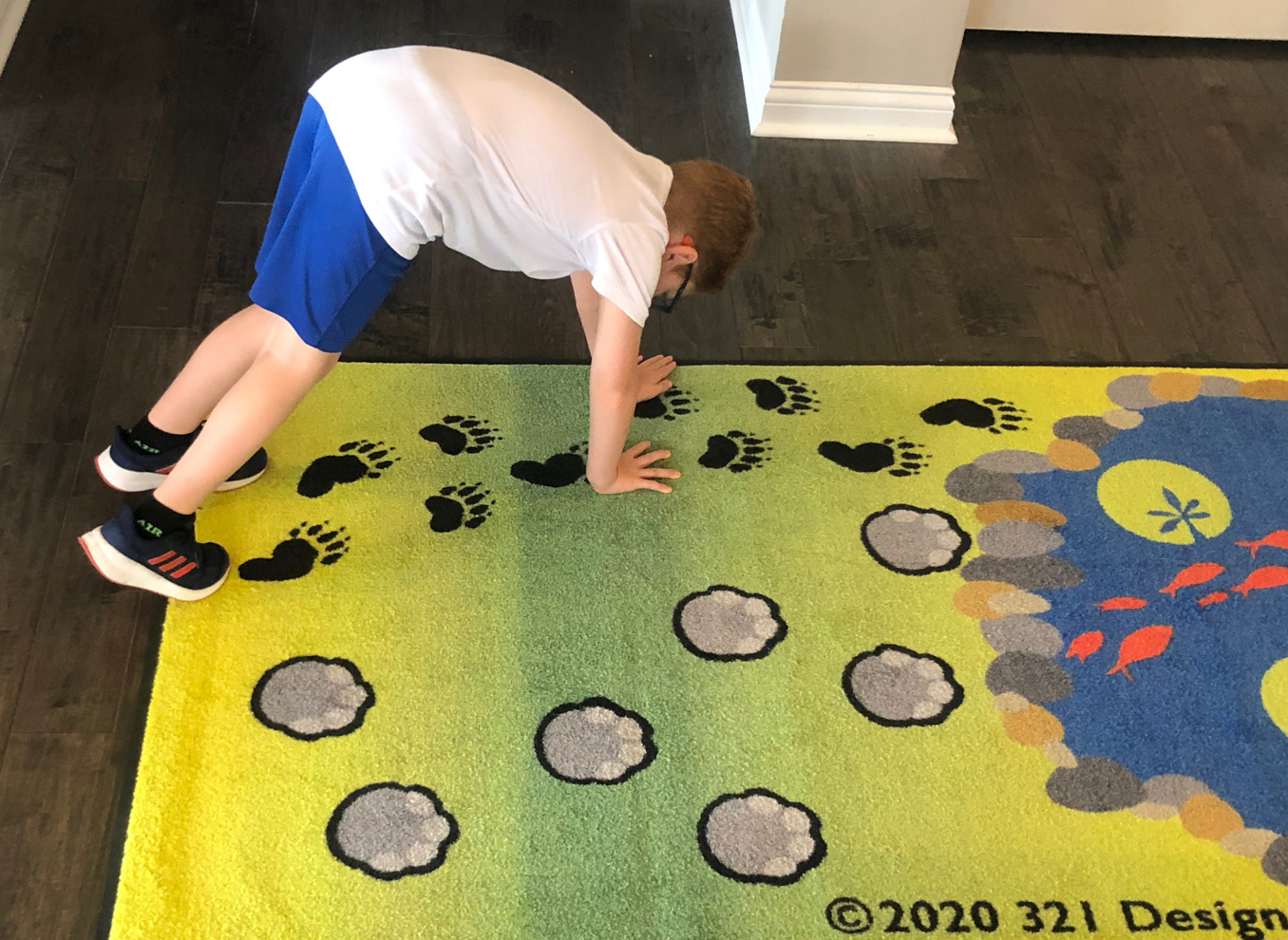
We love a good color palette as much as anyone, but the design is never just about looks. Every movement in a well-built path — hopping, balancing, pushing against a wall, crawling — is chosen on purpose, to deliver specific proprioceptive and vestibular input. That input has a real, measurable effect on the nervous system: research on sensory processing in school-aged kids has linked sensory regulation directly to executive function and academic engagement, not just behavior (Frontiers in Pediatrics, 2020).
This is also where having a clinical background behind the design really matters. Every 321 Sensory Paths layout is built with input from a pediatric physical therapist with 20+ years of clinical experience — not just arranged for visual appeal. You can see that approach in action across our full product lineup.
Myth #3: You need a dedicated room to do this right
Sensory rooms are wonderful when there’s space and budget for one, but they’re not a requirement. A sensory path is built to work in the spaces a building already has — a hallway, a corner of a classroom, an airport gate area, a hotel corridor. Because our products are portable (nylon rugs, peel-and-stick vinyl, wall graphics), there’s no construction, no permanent fixtures, and no need to find square footage that doesn’t exist.
This is a big part of why sensory pathways have moved from a niche therapy tool into a mainstream, everyday intervention — they fit into the building as it already is, rather than asking the building to change for them.
Myth #4: They only help with energy, not with calming down
This one actually has it backwards. Sensory paths aren’t just about burning off extra energy — the right sequence of movements can also help calm an overstimulated nervous system right down. Deep pressure and rhythmic, repetitive movement have been shown to support the parasympathetic nervous system, which is the part of the body responsible for easing the fight-or-flight response (self-regulation research, 2024).
In practice, that means the same product line can energize a sluggish classroom after lunch, or calm an anxious traveler before a flight — it just depends on which movements get sequenced where.
Myth #5: They’re complicated to install or maintain
Good news here: this is probably the easiest myth to bust! Our commercial rugs and mats are completely portable, so they can be picked up and moved to a new spot whenever your space needs change — no reinstall required. https://321sensorypaths.com/rubber-sensory-mats/ They’re also backed with rubber, so they stay put once they’re down and won’t slide around underfoot, and the rugs are machine washable for easy upkeep. Our vinyl sticker paths peel and stick directly to existing flooring, and they’re commercially printed with a laminated, scratch-resistant surface built to hold up to daily traffic.
The bottom line
A sensory path isn’t a gimmick, and it isn’t reserved for one type of person or one type of building. It’s a research-informed tool that helps a nervous system do what it needs to do — whether that’s a second grader before a math test or a hotel guest before check-in. If you’re trying to figure out which format makes sense for your space, take a look at our product pages, or reach out and we’re happy to walk you through it. Still have questions? We have a great resource with the answers — check out our FAQ page.
321 Sensory Paths products are designed in partnership with a pediatric physical therapist with over 20 years of clinical experience.